
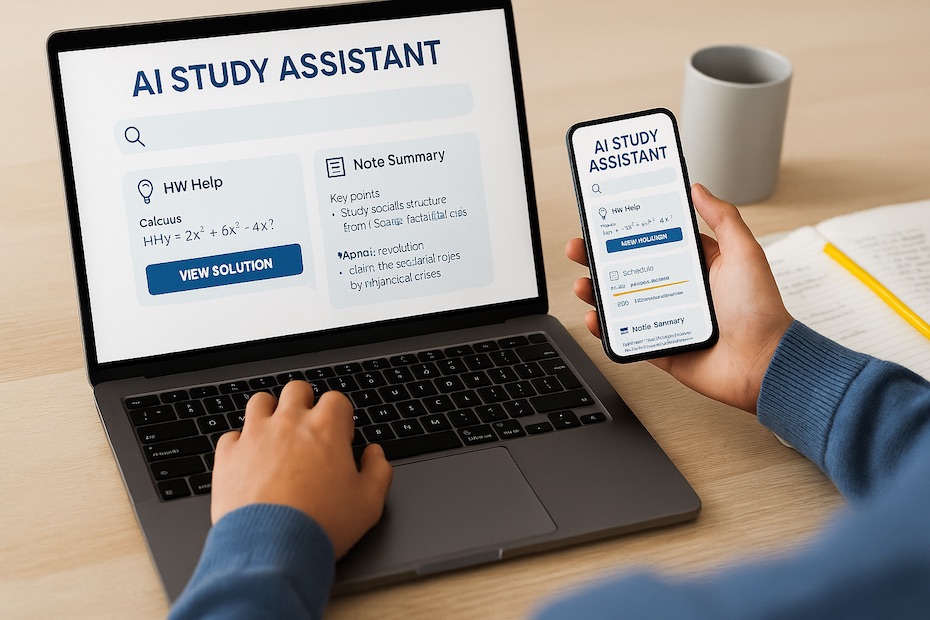
AI-powered study assistants are intelligent tools that use algorithms, natural language processing, and data analysis to support students with homework, research, and time management. These digital platforms offer personalized learning and real-time support, helping you study smarter—not harder.
If you’ve ever felt stuck during late-night study sessions, AI-powered study assistants are here to change that. These tools are reshaping how you handle assignments, understand concepts, and manage your academic load. This article walks you through what they are, how they work, their benefits, and how to integrate them into your routine for real academic gains.
What Are AI Study Assistants?
AI study assistants are software-based tools or apps designed to help you with academic tasks by mimicking the support you’d expect from a tutor or classmate. They use machine learning to analyze your behavior, predict your learning needs, and provide tailored feedback or suggestions. You can ask them questions, request summaries, generate study schedules, and even receive writing help—usually in real time. These assistants aren’t replacing your teachers; they’re streamlining how you approach your work.
Some popular examples include tools like ChatGPT for essay feedback, Socratic by Google for solving problems step-by-step, and Quizlet’s AI features for personalized flashcards. They’re accessible on phones, tablets, or desktops, which means support is always within reach.
How Do These Tools Actually Work?
AI assistants operate by combining natural language processing with large-scale educational data to understand questions and deliver relevant answers. When you input a prompt—like a math equation or a historical question—the assistant breaks it down, analyzes it against its database, and returns an answer tailored to your academic level.
What makes them feel “smart” is their ability to learn from your usage. Over time, they start suggesting better study times, customized explanations, and even reminders based on your habits. Tools with voice input and OCR (optical character recognition) also allow you to scan notes or speak your questions out loud, offering a truly interactive experience.
Benefits Beyond Convenience
Using AI-powered study assistants isn’t just about saving time—it’s about making your study sessions more effective. These tools can help reduce cognitive overload by organizing tasks and clarifying complex material in a way that matches your pace. They also reduce procrastination by keeping you engaged with reminders, gamified learning, or progress tracking dashboards.
You’ll also find that AI assistants foster independence. Rather than waiting for a tutor’s next session, you get help instantly and gain the confidence to tackle problems on your own. Some platforms now even offer mental well-being checks or mindfulness suggestions integrated into the academic flow—turning study support into holistic productivity.
Are They Reliable for Complex Subjects?
While AI study assistants excel at breaking down basic concepts, many are now capable of helping with advanced coursework. Some can walk you through calculus problems, suggest chemistry lab hypotheses, or guide you through essay structure for philosophy. They’re becoming increasingly robust in adapting to high school and university-level content.
That said, it’s important to use them as companions—not crutches. AI can misinterpret context or produce overly simplified answers if you’re not specific with your queries. The best use case is to pair these tools with your textbook, lecture notes, and critical thinking. They amplify your study strategy, but they don’t replace it.
How to Get Started with AI Study Helpers
Start small. Choose one AI assistant that aligns with your needs. For writing, Grammarly and Jasper are useful. For homework help, tools like Socratic, Brainly, or ChatGPT can be effective. Many of these tools are free or offer student-friendly pricing models.
Integrate them into your workflow by setting up routines. Use AI to summarize readings, quiz yourself, or draft assignment outlines. Track your learning progress and adjust your inputs over time to get more tailored results. Think of it as onboarding a digital study partner—one that doesn’t sleep or take coffee breaks.
AI and Academic Integrity: What’s the Line?
As these assistants become smarter, so does the conversation around academic honesty. While they’re designed to support learning, misusing them to do your work can get you into trouble. Most institutions now emphasize that AI tools should supplement—not replace—your original thought.
Use them to brainstorm, clarify, and organize—not to generate entire submissions. When you write with help from AI, always add your voice and double-check facts. Think of AI as your guide through rough terrain—not the one who takes the test for you.
The Future of AI Study Tools
You’re not just watching a trend—you’re participating in the early phase of what will become a standard part of modern education. Expect AI assistants to become more personalized, more visual, and better at adapting to emotional and cognitive signals. Soon, they may adjust explanations based on your tone, stress level, or facial expressions.
Emerging platforms are also experimenting with VR integration and voice-based tutoring that makes studying feel like an immersive game. The future of education isn’t just digital—it’s adaptive, responsive, and built around your unique learning patterns.
What Can AI Study Assistants Do for Students?
- Answer complex academic questions
- Summarize notes and readings
- Help plan study schedules
- Offer real-time writing feedback
- Reduce procrastination with reminders
In Conclusion
If you’re looking to gain an edge in your academic life, AI-powered study assistants give you that leverage. They help you stay focused, personalize your learning, and simplify even the toughest topics. Use them wisely, stay involved in your own process, and you’ll find they’re more than tools—they’re quiet allies in your academic journey.
For audio deep dives on how technology is transforming learning, check out my SoundCloud channel where I discuss AI tools, study hacks, and the future of digital education.

Dean Tellone is the President & CEO of Tellone Financial Services, an Anaheim-based financial planning and private lending firm he founded in 1975. An Enrolled Agent with 40+ years in mortgages, estate and retirement planning, accounting, and taxes, he oversees $200M+ in mortgage funds and continues to serve homeowners across Southern California.